Posts

Overcoming the taboo of menstruation

Image
Finally, this post will touch on some of the programs that are trying to alleviate the difficulties of poor sanitation and consequently sexual harassment. The recent emergence of literature on the struggle of sanitation for women in Africa, which was previously neglected behind clean water, has promoted the development of sanitation facilities. This growing recognition should in turn help to lower sexual violence for women that occurs as a result of the journey to poorly safeguarded toilets, and further promote the education of Water, Sanitation and Hygiene (WASH). In my opinion, the most crucial factor contributing to an improvement in sanitation levels in Africa is education. As I have disclosed in my previous posts, there is an unequal gendered attendance within schools due to the expected roles that young girls and women carry out, contributing to their time poverty. The inability to access education on menstruation and sanitation, along with poor facilities from l...

Period poverty and the struggle of sanitation

Image
Following my previous post, I am going to explore the trouble that sanitation poses for women in Africa. Whilst there are rural water deficits of which I have mentioned, this post is going to home in more on urban areas where there is still a lack of facilities despite the greater prevalence of infrastructure. Ultimately, the challenge urban areas face is that infrastructure growth has to match the fast growing urban populations ( Davis, 2006 ). In addition, the foreground of concern in African infrastructure has been centred around providing clean water and it has been assumed that improved sanitation will follow. However, sanitation is of paramount importance and should not be neglected. Poor sanitation can result in widespread disease such as diarrhoea. Of the deaths caused by this disease, 88% are due to unsafe water, poor sanitation and inadequate hygiene activity. With the lack of academic focus on toilet habitats, ( George, 2008 ) alongside a lack of successful proj...

Vulnerability and violence

Image
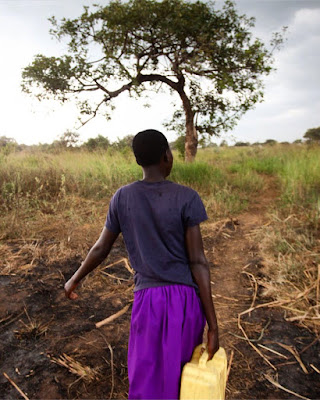
As discussed in my previous posts, the traditional nature in which some women are expected to travel long distances to collect water subjects them to the threat of sexual harassment. 80% of households where water collection is not within close proximity to the home is carried out by women and girls ( Kayser et al. 2019 ). Furthermore, these women are threatened by sexual harassment when they are forced to openly defecate due to a lack of sanitation provisioning. This threat is heightened by cultural norms that deem it inappropriate for women to openly defecate in the presence of people or at the risk of being seen. Hence, they are obliged to do so when it is dark which is a more unpredictable and unsafe period to be alone as a woman. In this post I am going to specifically look at cases of sexual harassment arising during water collection alongside sexual harassment that occurs as a result of a lack of basic sanitation facilities. Whilst there is a variety of definitions a...